I was seventeen—old enough to want freedom, young enough to fear being alone. The summer my family left for Canada without me, our house felt enormous. Rooms echoed, nights stretched too long, and I slept with the radio on just to hear another voice. They were supposed to be gone seven days.
On the seventh day, a postcard arrived.
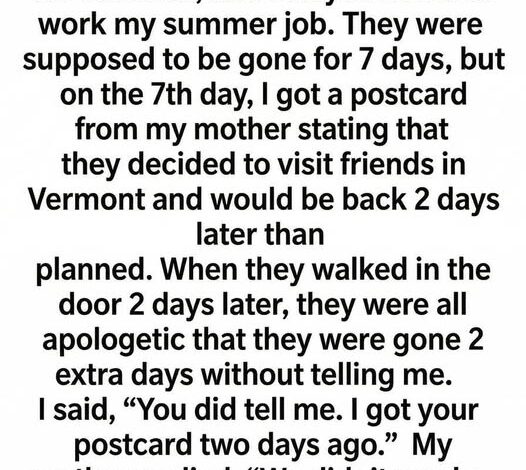
It was addressed in my mother’s handwriting—familiar, cheerful. She wrote that they’d decided to stop in Vermont to visit friends and would be home two days later. I felt immediate relief, like the house itself had relaxed. I carried that postcard everywhere, rereading it whenever the quiet crept in.
Two days later, my family walked through the door.
I joked about the extended trip and held up the postcard. My father frowned. My siblings went silent. My mother laughed—then stopped. She said they hadn’t sent anything. No postcard. No Vermont stop. They’d driven straight home, exactly as planned.
The card was real. The stamp, the postmark, the date—everything checked out. We searched the house, as if answers might be hidden in drawers or trash. That night, I couldn’t sleep. What unsettled me most wasn’t fear—but how comforted I’d felt.
Years later, I don’t think it was a trick or a threat. I think it was something quieter: reassurance shaped like familiarity. The mind, especially when young and alone, looks for certainty and creates it if needed.
I still don’t know where the postcard came from. But I know what it gave me—two peaceful days.
And somehow, that’s the strangest part.