The Texas heat hit like a fist as my battered pickup died outside Fort Blackhawk. I hadn’t worn a uniform in ten years—not since the ridge, not since I walked away from medals I didn’t want and memories I couldn’t outrun. But Colonel Andrew Mercer called anyway. Young medics were freezing under fire. Kids were dying. “You don’t owe me,” he said. “But you owe them.”
So I came.
Inside the polished, sterile headquarters, a brand-new lieutenant—Bishop—blocked my path and sneered at my faded BDU. “Civilian contractors aren’t authorized to wear that. Take it off. You didn’t earn it.” The lobby went silent.
I didn’t fight. I just slid off my jacket.
A collective breath caught.
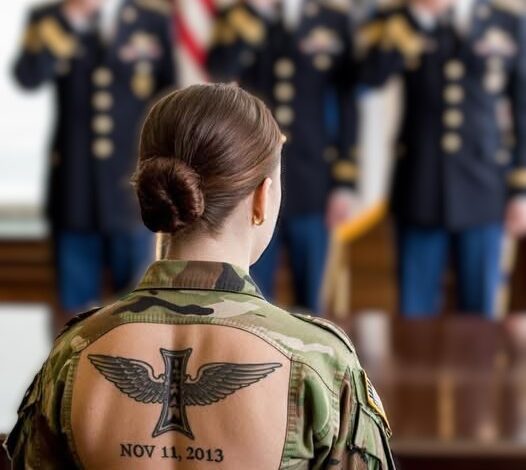
Across my back was a scarred tattoo: a combat medic cross, steel-winged, and one date burned into skin—07 • MAR • 09. Takhar Ridge. The battle nobody talked about. The one veterans whispered about. The day twenty-three men should’ve died… and didn’t.
Colonel Mercer appeared, breathless. “Captain West.”
Bishop turned white.
Mercer’s voice cut through the room like a blade. “Do you know who you just humiliated?”
Then a soldier stepped forward, tears in his eyes. “You won’t remember me,” he whispered. “But I remember you. You kept me alive.”
Six weeks later, I taught medics how to survive when the book fails—how to improvise, triage, and hold steady in hell.
When I left, the base didn’t salute my uniform.
They saluted the scars.